
STAR ANISE GUIDE

Star Anise: Harvest Timing and How We Price It

Guangxi picks spring star anise from February to April and autumn star anise from August to October; Vietnam's autumn crop follows about a month later. A dried price is built from the fresh-fruit price, the drying ratio (about 5 kg of fresh fruit per kilo for sulphur-free export fruit), the crop and the grade. In September 2026, fully dried, sulphur-free grade-1 autumn fruit stood 20–30% above its October 2024 level in Yulin.

By Fu Yang Updated

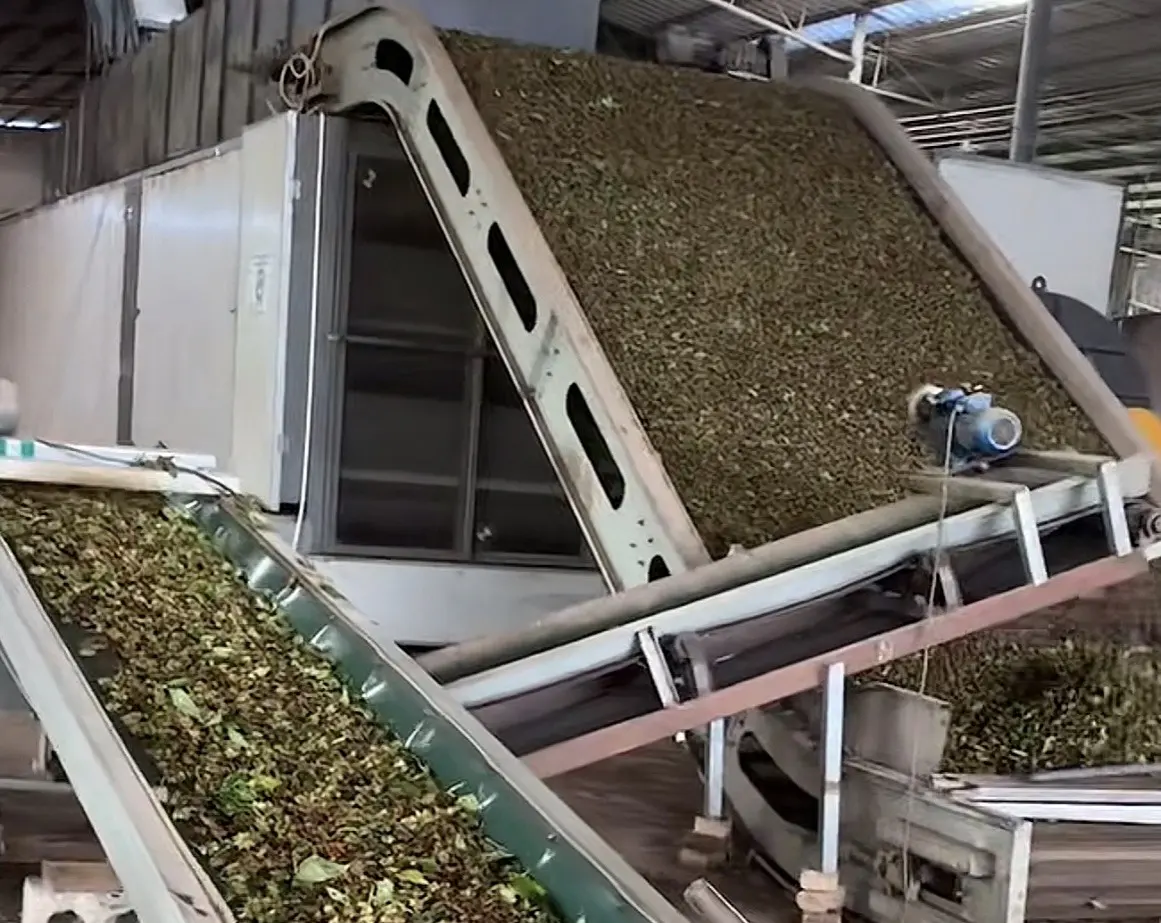
A vibrating screen separating raw star anise from stems and leaves

PRACTICAL TIPS

Star anise harvest calendar

Star anise harvest calendar
CropHarvest monthsWhat it means for you
Guangxi spring (Chunhua)February–AprilSmaller, lower-oil fruit. Dried, it trades about 20–30% below autumn fruit.
Guangxi autumn (Dahong)August–October, moving south to north over about 20 daysThe export staple. New-crop sulphur-free fruit is dried and graded from late August.
Vietnam springMarch–May, mainly March and AprilSmall, thin fruit sold mainly as bulk or for powder.
Vietnam autumnAugust–November, mainly September and OctoberVietnam's main export crop, about a month behind Guangxi's.
Between cropsMainly June–July and December–JanuarySupply comes from stock. Ask when the lot was picked and how it has been stored.

How a kilo price is built

Every dried price starts with fresh fruit, bought at the farm gate by the jin (half a kilo). In autumn 2026, old-tree fruit at Gulong in Teng County (Wuzhou) sold about 15% below its early-crop peak. Rong County and Beiliu fruit sold slightly below Gulong, and grafted fruit from Baise and Chongzuo about 20–35% below old-tree fruit.

The second factor is the drying ratio. Sulphur-free, sun-dried export fruit at no more than 12.5% moisture takes about 4.8–5.2 kg of fresh fruit per kilo, and traders cost it at 5 to 1. Domestic “eighty-per-cent dry” fruit at 15–18% moisture needs only 3.5–4 kg, and sulphur-treated fruit 2.5–3 kg. That is why a much cheaper quote often means wetter or sulphured fruit: you are paying for water, or for a residue your importer may reject.

Then come the grade (open stars, broken tips, impurities), the crop (autumn over spring), the place (same-grade Yulin fruit trades about 10–20% above Baise fruit) and washing, which adds a few per cent for washed export fruit.

Worked example: from fresh fruit to a dried kilo

Grade-1, sulphur-free, sun-dried autumn fruit. One jin is half a kilo.

1. Start from the fresh price

Star anise is bought fresh at the farm gate and priced by the jin.

2. Five kilos of fresh fruit for one dried kilo

Blanched and sun-dried to 12.5% moisture, the fruit loses about four-fifths of its weight. So the fruit in one dried kilo costs 5 times the fresh price per kilo, or 10 times the price per jin.

3. Then drying, washing, grading and losses

Blanching, 7–10 days of sun drying, washing, hand selection, broken and branch fruit sold off at lower prices, and the trader's margin come on top of the fruit.

What it means

Every RMB 0.5 per jin on fresh fruit adds about RMB 5 to a dried kilo. That is why the dried price follows the farm-gate price so closely.

Grafted fruit, same method

Grafted fruit from Baise sells fresh at about 20–35% below old-tree fruit, and the dried price follows: it sells below old-tree fruit from Yulin and Wuzhou.

The same fruit, dried three ways

Start from the same fresh fruit and change only the drying.

Sulphur-free, sun-dried to 12.5% moisture: 5 kg of fresh fruit in each dried kilo.

Domestic “eighty-per-cent dry” fruit at 15–18% moisture: 3.5–4 kg, so 20–30% less fruit in each kilo.

Sulphur-treated fruit: 2.5–3 kg, so 40–50% less fruit in each kilo.

A lot offered well below the market is usually one of the last two. You are buying water or a sulphur residue, not a bargain.

From the Yulin price to your port, an export lot adds selection to your grade, laboratory testing, export packing, transport to the port and documents. Our reference price on the product page covers bulk supply and is reconfirmed in the quotation.

Price index, September 2026

Yulin market prices for dried star anise as an index, with grade-1, sulphur-free, fully dried autumn Dahong = 100. They show how grades relate, not our offer: the reference price on each product page is for bulk supply and is reconfirmed in a quotation.

Grade-1 autumn Dahong, sulphur-free, fully dried

100

Autumn Dahong, bulk

about 85

Spring fruit, dried

about 70

Dried branch fruit

about 50

Three years of grade-1 autumn fruit

Fully dried, sulphur-free Dahong rose about 20% between October 2024 and September 2025, and in September 2026 stood 20–30% above its October 2024 level.

Low farm-gate prices have consequences in the groves. Picking an old seed-grown tree costs about twice as much per jin as picking a grafted dwarf tree, because pickers climb and bring in only 100–200 jin a day, against 400–500 jin from the ground. When fresh prices are low, an old-tree grower keeps little after paying pickers, and some remote groves are left unpicked. Our team expects that two or three more years of low prices would lead many growers to replace old seed-grown trees with grafted dwarf trees, which would mean more uniform but thinner fruit on the market.

The price gap between Guangxi and Vietnam

In September 2026, duty-paid Vietnamese bulk arriving at the Chinese border traded about 20–30% below Chinese bulk. Same-grade, sulphur-free Yulin autumn fruit traded about 15–20% above Lang Son fruit, and Chinese sulphur-free export Dahong is usually quoted 15–20% above comparable Vietnamese fruit FOB.

The gap pays for thicker lobes, more oil and a sweeter taste, described in our guide to spring and autumn star anise. It is also why the origin of every lot is declared from its supply records.

QUICK CHECK

Before you ask for a price

  • Target shipment month
  • Autumn or spring crop, and harvest year
  • Sulphur-free requirement and SO₂ limit
  • Moisture limit
  • Whole or broken, and grade
  • Quantity, packing and destination

Price comparisons on this page are dated September 2026 Yulin market references, shown as percentages or an index. They are not offers and will change. One jin is 0.5 kg; one mu is about 667 m².

BUYER QUESTIONS

Frequently asked questions

When should I book autumn star anise?

Tell us your target shipment month before August. New-crop Guangxi autumn fruit is dried and graded from late August into October, and demand at that time can lengthen preparation.

Why is sulphur-free star anise more expensive?

It takes about 5 kg of fresh fruit to make a kilo of sulphur-free, sun-dried fruit, against 2.5–3 kg for sulphur-treated fruit, plus a week or more of sun drying. So it costs clearly more than sulphur-treated fruit, and it is the fruit importers accept.

Why do quotes for the same star anise differ so much?

Usually they are not for the same fruit. Compare the moisture limit, the crop (spring or autumn), the share of open stars and broken tips, and the SO₂ limit before comparing price. A quote well below the market often means wetter or sulphur-treated fruit.

Are these prices your offer?

No. They are dated Yulin wholesale references that show how the market moves. Our current export reference is on each product page with its review date, and a quotation confirms the price for your lot.

What moves star anise prices?

The size of each crop (trees bear heavily one year and lightly the next), the balance between Guangxi and Vietnamese supply, the weather at drying time, and how much stock is held between crops.