Commercial grade
Whole Cumin Seeds — product sheet
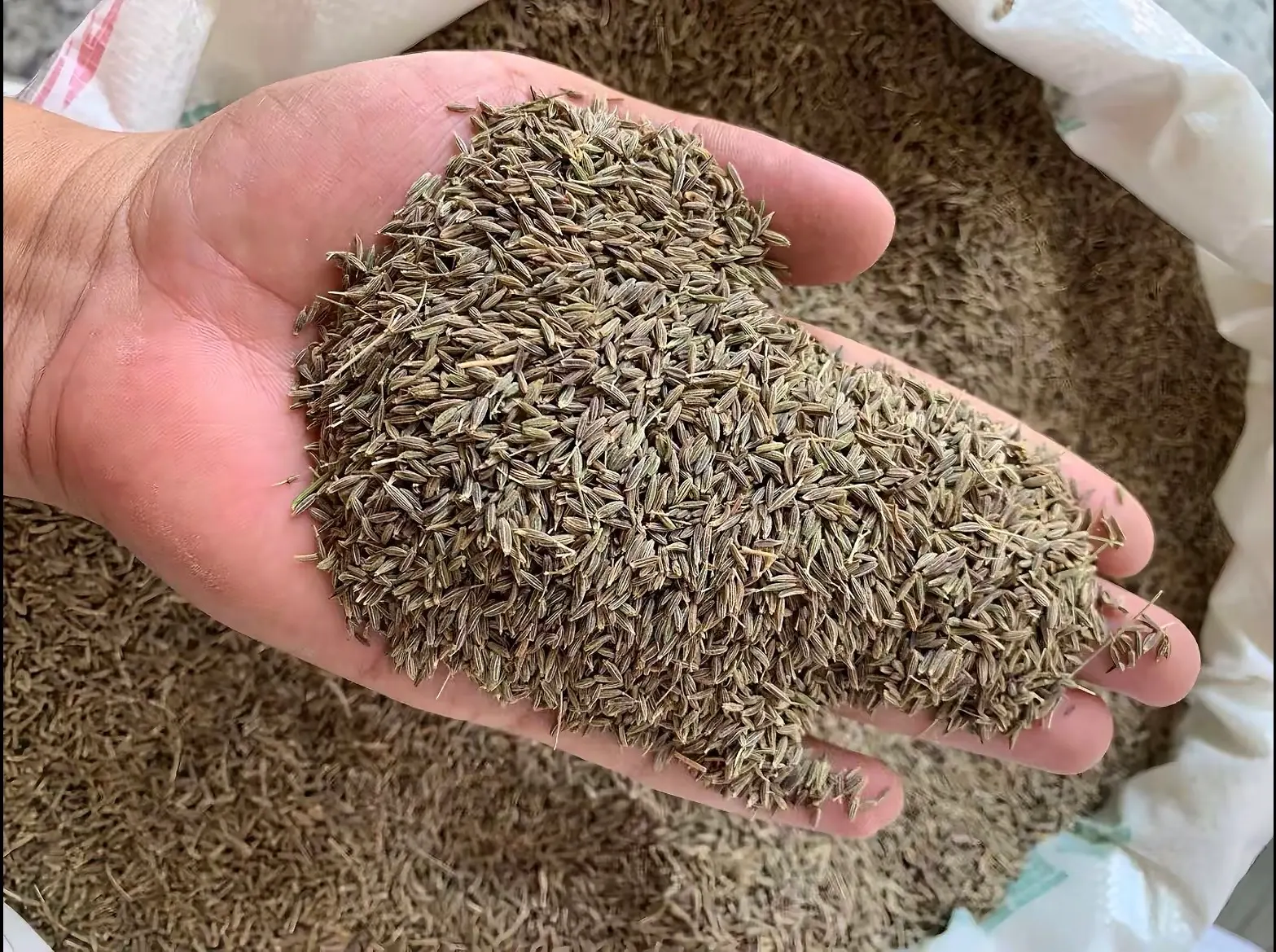
Whole cumin seeds with botanical identity and offered-lot origin confirmed for export.
Public reference specification
Public reference specification | Parameter | Published reference | How to verify |
|---|
| Purity | min 99 % | Check and record against the agreed specification |
|---|
| Colour | Natural yellow brown | Check and record against the agreed specification |
|---|
| Moisture | max 10 % | Request a laboratory test tied to the identified sample or lot |
|---|
| Total ash, dry basis | max 8.5 % | Request a laboratory test tied to the identified sample or lot |
|---|
| Acid-insoluble ash, dry basis | max 1.5 % | Request a laboratory test tied to the identified sample or lot |
|---|
| Volatile oil, dry basis | min 2 ml / 100 g | Request a laboratory test tied to the identified sample or lot |
|---|
| Origin | Xinjiang principally; Inner Mongolia or Gansu may apply to the offered lot | Check the supplier record and lot identity |
|---|
| Form | Whole seeds | Match the identified sample to the written order |
|---|
| Packaging | 25 kg lined PP bag with buyer-approved export marks | Match the packing specification to the packing check |
|---|
Reference values, not results for a specific lot; the agreed specification and your lot’s test decide.
Commercial details
- Botanical name
- Cuminum cyminum L.
- Origin
- Xinjiang principally; Inner Mongolia or Gansu may apply to the offered lot
- Form
- Whole seeds
- Typical uses
- Seasoning · Spice Blends · Food Processing
- Minimum order
- 500 kg
- Packaging
- 25 kg lined PP bag with buyer-approved export marks
- Shelf life
- Confirmed for the offered product and packing
- Storage
- Store cool, dry and clean; protect from moisture and strong odours.
Buying adviceState the origin (Xinjiang, Gansu or Inner Mongolia), selected or bulk grade, purity and foreign-matter limits, volatile oil, moisture, destination tests, packing and quantity.
AssessmentConfirm botanical identity, purity, moisture, seed appearance, aroma and foreign matter.
Sample recordSample reference and date, product photographs, inspection checklist and packing photographs.
Technical referencesISO 6465:2009 · GB/T 22267-2017 — current Chinese standard
How we grade this
Cumin is checked by rubbing and crushing. Kun and Chuangui run a handful through their fingers: dry seed is crisp and does not stick. They look for full seeds with natural colour (Xinjiang seed is large, 4–6 mm, and blue-grey to green) and for dust, stalks, hollow seeds and black or mouldy seeds. Crushed, good cumin smells clean and nutty; sour, mouldy, sulphur or stale-oil smells are rejected.
As a first screen for mixed lots, they count ten seeds from several bags. If three or more are small and dark, the origin documents are checked again. Origin comes from the records, and purity, moisture and volatile oil from the laboratory.
Frequently asked questions about Whole Cumin Seeds
Xinjiang, Gansu or Indian cumin: what is the difference?
Xinjiang seed is the largest (4–6 mm), blue-grey to green, with a clean, toasted-nut aroma. Gansu seed is smaller, yellower and milder, and about 20–30% cheaper. Indian seed is small (2–4 mm), deep yellow-brown, sharper and more herbal, and lowest in price. Turkish cumin is the premium benchmark.
When is new-crop cumin available?
Turpan harvests from late June and Kashgar and Bazhou in July. New Xinjiang cumin reaches Yulin in August and Gansu cumin in late August. Indian cumin comes to market in February and March.
What does optical sorting add?
After air-cleaning and screening, a colour-sorting pass removes discoloured seeds and foreign matter, for a cleaner lot with 0.5% impurities or less. It adds a small premium per kilo.
Can I get cumin powder?
Yes, through a processing partner. Cumin is milled at 45 °C or below after selection, then sieved to 60, 80 or 100–120 mesh; powder is quoted separately.