
CASSIA ORIGIN GUIDE

Guangxi, Vietnamese and Indonesian Cassia: What Actually Differs

Guangxi cassia is sweet and warming with a long finish; Vietnamese cassia is usually more pungent and less sweet; Indonesian cassia is intense, camphor-like and slightly bitter. Bark thickness, oil and drying matter more than the country name, and every lot's origin is declared from its records. Our catalogue is Guangxi cassia.

By Fu Yang Updated

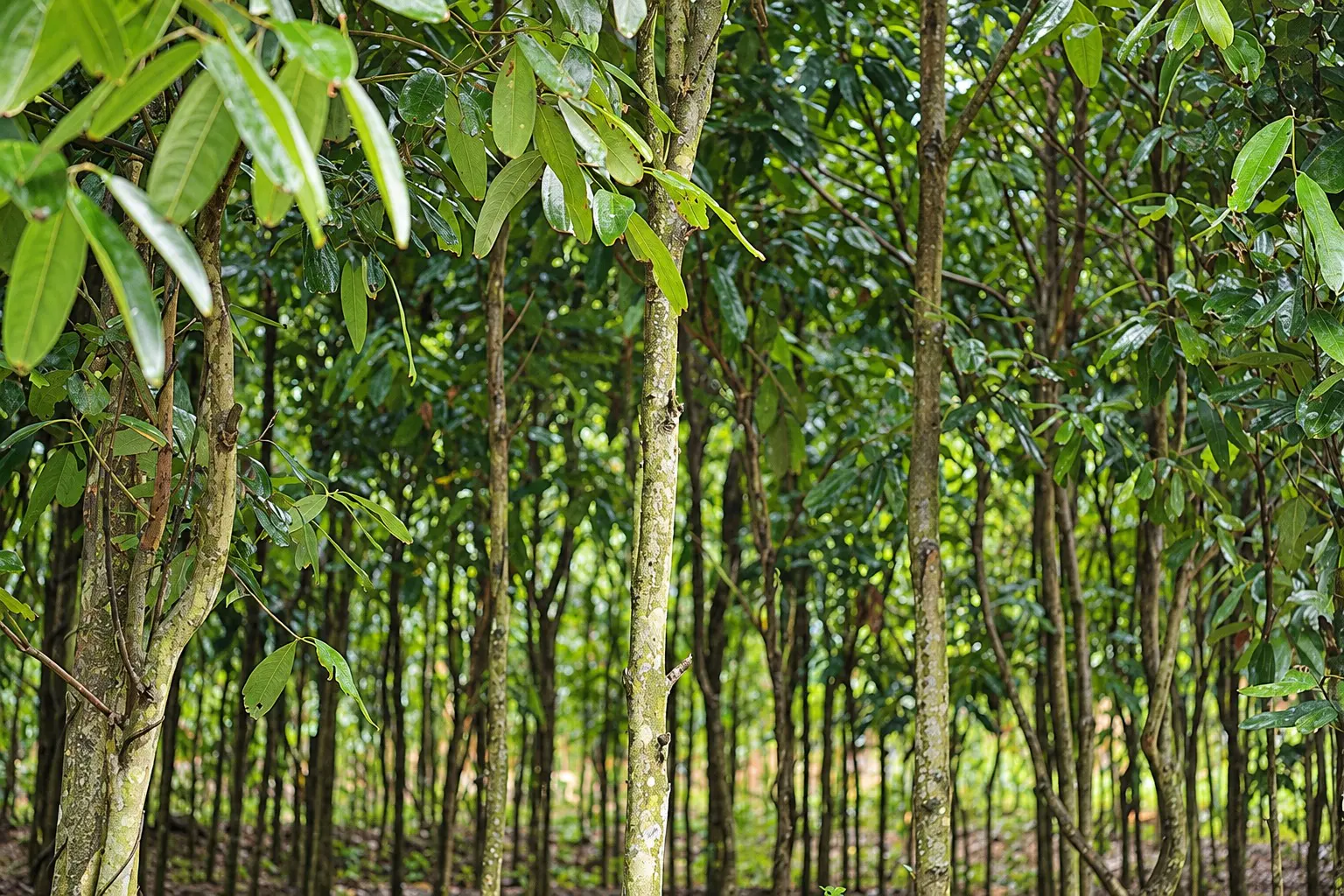
Cassia trees growing at origin in Guangxi

PRACTICAL TIPS

Cassia origins at a glance

Cassia origins at a glance
Origin and typeWhat our graders see and tasteTypical use
Guangxi ordinary cassia (Pingnan, Teng County)Even bark and a clean aroma; sweet and warming with a long finish. The common Yulin-market supply.Sticks, rolls, cut pieces and powder for food and drinks.
Guangxi oil cassia (Fangcheng)4–6 mm thick, tightly rolled and heavy; rough grey-brown outside, oily purple cut surface; sweet and lingering.Premium food and medicinal channels.
Vietnam, Thanh Hoa oil cassia3–5 mm, smoother red-brown surface with lighter purple oil marks; often scraped and cut to length.Premium buyers who specify Vietnamese origin.
Vietnam, Lang Son and Cao BangMedium thickness; more pungent and spicy, less sweet, sometimes astringent.Price-led bulk, used much like ordinary Guangxi bark.
Indonesia, Lampung (Sumatra)Thick bark of 2–4 mm, looser roll, smoother yellow-brown surface and a drier cut; intense and camphor-like, bitter, without a sweet finish.Strong braises and oil extraction.
Indonesia, BangkaThinner, milder bark.Low-priced bulk and chips.

Same trade name, different trees

Guangxi cassia is Cinnamomum cassia, also listed as C. aromaticum. Much northern Vietnamese bark is traded as cassia too, while the names “Vietnamese cinnamon” and “Saigon cinnamon” usually refer to Cinnamomum loureiroi. Indonesian cassia is usually Cinnamomum burmannii, sold as Korintje. Because the names overlap, confirm the botanical name for every lot.

Tree age drives bark quality everywhere. Guangxi seed-grown trees are stripped from 8–10 years, and oil-cassia trees take 15–20 years. Vietnamese trees are first stripped at 7–10 years, and Indonesian trees are harvested from 5–8 years on shorter rotations. Older trees give thicker, oilier bark.

When each origin is harvested

China strips about 70% of its cassia in spring (March–May, mainly April) and 30% in autumn (August–September); autumn bark is thicker and oilier. Vietnam's spring crop runs from February to April and its autumn crop from September to November. Indonesia harvests mainly from July to September on Sumatra and from August to October on Bangka, after the rains, when bark is said to be richest in oil. Through the year, supply passes from Chinese and Vietnamese spring bark to Indonesian mid-year bark, and then to Vietnamese autumn bark.

How our graders tell them apart

Quick checks used at our Yulin desk. They screen a lot before testing; they do not prove where it grew.

Weigh

Compare equal volumes. Thick, oily Guangxi oil cassia is heavy; thin Bangka bark is light.

Cut or scrape

Guangxi oil cassia shows an oily purple cut, Thanh Hoa bark lighter purple marks, and Indonesian thick bark a drier cut.

Snap and smell

Clean, sweet and warm is right. A sour or sulphur smell means fumigation; musty or burnt means damage in drying or storage.

Soak a piece

In water, Guangxi bark gives a light yellow colour, Vietnamese bark a deeper yellow and Indonesian bark a red-brown, bitter liquid.

Price index, September 2026

Yulin market prices for dried bark as an index, with Guangxi grade-1 sulphur-free quills = 100; not offers. Ordinary Guangxi quills rose about 20% from 2024 to 2025 and stood 35–40% above 2024 in September 2026. Oil cassia is still about 20–25% below its 2023 peak.

Guangxi grade-1 quills, sulphur-free

100

Guangxi scraped inner bark

about 155

Fangcheng oil cassia, sulphur-free

about 195

Vietnamese bulk

about 85–90

Indonesian thick bulk

about 80

How a cassia price is built

From fresh bark to a dried kilo, Guangxi, spring 2026.

Ordinary quills

Spring bark dries at about 4 to 1, so the bark in a dried kilo costs 4 times the fresh bark price per kilo. Rolling, 5–7 days of sun drying, mountain transport, grading and margin come on top.

Scraped quills

Scraping removes 15–20% of the bark, so a dried kilo takes 4.5–5 kg of fresh bark, plus the hand scraping. That is why scraped quills trade about 30% above ordinary quills.

Fangcheng oil cassia

Fresh oil-cassia bark costs about twice as much as ordinary bark and dries at 3–3.5 to 1. The dried bark trades at about twice the price of ordinary quills.

Why autumn bark costs more

Autumn bark is thicker and oilier and dries at about 3.5 to 1 instead of 4 to 1. It trades about 15–20% above spring bark.

What we supply

Our catalogue is Guangxi cassia in 11 forms, from long bark and rolls to cut sticks, chips, twigs and powder. If your specification names Vietnamese or Indonesian cassia, tell us before you order and we will say plainly whether we can meet it.

QUICK CHECK

When you specify cassia

  • Botanical name and growing country
  • Form, dimensions and minimum bark thickness
  • Spring or autumn bark, if it matters
  • Minimum volatile oil
  • Sulphur-free requirement and SO₂ limit
  • Packing, quantity and destination

The differences described here come from our team's grading in Yulin. They are first screens, not laboratory findings: the certificate of analysis for your lot is what counts. Prices are dated market references, not offers.

BUYER QUESTIONS

Frequently asked questions

Is Vietnamese cassia stronger than Chinese cassia?

It is usually more pungent and less sweet, and Thanh Hoa oil cassia is rich in oil. Which is “stronger” is best settled by the volatile-oil result on the lot's certificate.

Why is Indonesian cassia cheaper?

Shorter rotations and lower costs, and thinner bark from Bangka. Its intense, camphor-like, slightly bitter taste suits strong braises and oil extraction more than drinks and baking.

Does the water test prove origin?

No. It is a quick screen our graders use. Origin comes from supply and import records, and repacking or processing in China does not change it.

Which origin should I choose?

Guangxi for a sweet, warm profile in drinks, baking and whole sticks; Vietnamese oil cassia when your specification calls for it; Indonesian when intensity and price matter more than sweetness.

How can I tell if cassia was sulphur-treated?

A sour or sulphur smell on snapped bark is the warning sign; the sulphur dioxide result on the lot certificate is the proof. Food-grade cassia should be dried without sulphur.